

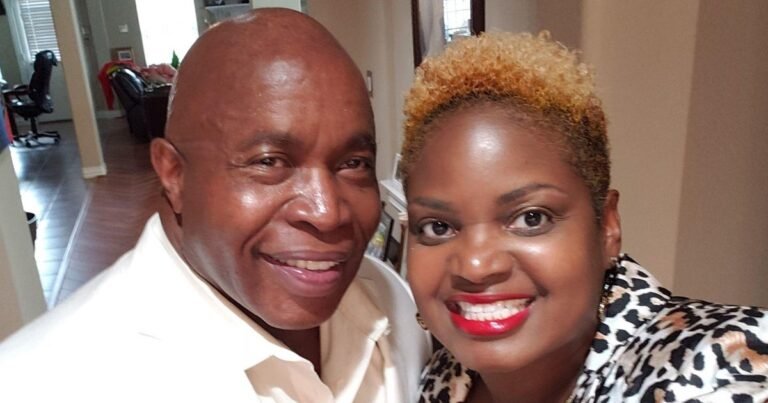
On a warm summer night in 2019, just after 3 a.m., first responders arrived at the Houston home of Renard and Patricia Spivey. They discovered 52-year-old Patricia Spivey dead in a closet, having suffered multiple gunshot wounds. Her husband, Renard Spivey, a Harris County sheriff’s deputy and television bailiff, had a bullet wound in his leg.
Renard Spivey, who served as a bailiff on the courtroom show “Justice for All with Judge Cristina Perez,” told officers the couple had been arguing and fighting over a gun when it fired. He was detained and transported to a hospital. Patricia’s 83-year-old father, who suffered from dementia, was also in the home but was asleep during the shooting.
First responders on the scene questioned how a gun could accidentally discharge multiple times. They also noted the significant size difference between Renard Spivey, a large bodybuilder, and his smaller wife, finding the struggle narrative difficult to reconcile. Patrina Marshall, Patricia’s daughter from a previous relationship, arrived at the scene and was told her mother had died during a struggle.
The medical examiner’s autopsy report revealed Patricia Spivey had multiple gunshot entry and exit wounds. The fatal shot pierced her lungs and heart, leading the medical examiner to rule the death a homicide, defined as an intentional killing. On July 29, 2019, Renard Spivey was formally charged with his wife’s murder.
Spivey posted a $50,000 bond and returned to the house where investigators believed he intentionally shot his wife. He insisted the death was an accident, stating he loved his wife and treated her like a queen. However, he had refused to give a statement to police at the hospital on the advice of his union representative.
Patricia’s family, including her daughter Patrina Marshall and cousin Cybil Shepherd, questioned the circumstances and the amount of the bond. They remembered Patricia as the family’s caregiver and a dedicated executive assistant at Methodist Hospital in Houston. Her absence left a noticeable void in their lives.
The Spivey’s relationship, which began with a whirlwind romance and a proposal in 2013, was described by friends and family as having become strained. Patricia’s childhood friend, Ezra Washington, alleged Renard was controlling and that Patricia had planned to leave him. He claimed she was fed up with Renard’s suspected steroid use, which she blamed for a lack of intimacy.
Renard Spivey denied being controlling or using steroids, stating he was receiving doctor-prescribed testosterone replacement therapy. He acknowledged marital issues began about a month before the shooting, stemming from Patricia’s accusations of infidelity due to their lack of intimacy. Security footage from the night showed tension, with Patricia refusing to kiss him.
Spivey’s account to “48 Hours” described Patricia confronting him in the closet with his own loaded gun after he took her phone. He said he tried to disarm her, and during the struggle, the gun discharged, first shooting him in the leg and then firing again as they fell, striking Patricia. His defense attorneys argued the Smith & Wesson semiautomatic pistol had a dangerous design with no external safety, making accidental discharge likely during a struggle.
Prosecutors, however, suspected a fourth gunshot heard on surveillance audio approximately 90 seconds after the initial three was Spivey shooting himself to create a cover story. The defense countered that the sound was likely the click of another camera activating. They also pointed to Spivey’s calm demeanor during his 911 call and his delay in mentioning the accidental shooting as signs of guilt.
The trial, delayed for years due to the pandemic, began in late 2023. The prosecution argued Renard Spivey snapped during an argument and intentionally killed his wife. The defense maintained it was a case of self-defense against an armed Patricia, followed by an unintentional discharge of the weapon.
A key point of contention was whose finger was on the trigger. The defense noted the trigger was never swabbed for DNA. The prosecution’s key witness, Ezra Washington, testified about incriminating phone calls with Renard, but the defense successfully cast doubt on their existence, as no call records were found.
After 12 hours of deliberation, the jury found Renard Spivey not guilty on December 6, 2023. He collapsed in tears, while Patricia’s family expressed shock and disbelief. They felt justice had not been served for Patricia.
Since his acquittal, Renard Spivey says he has been active in community work and volunteering. He maintains he loved his wife deeply and grieves her loss every day. Patricia’s family, meanwhile, continues to cope with their loss, feeling her absence profoundly and struggling to reconcile the verdict with their understanding of the events.
This news article is created with AI enabled services and auto published, therefore it might contain errors, reader discrimination advised.
This article and views expressed therein, are solely that of the original news source also displayed for the interested reader, therefore it is not an act of copyright infringement by this platform, also this platform only aggregates the content and has no bearings and or shares any opinions or promotes views expressed by the original author, all intellectual property rights is totally credited to the original source.