

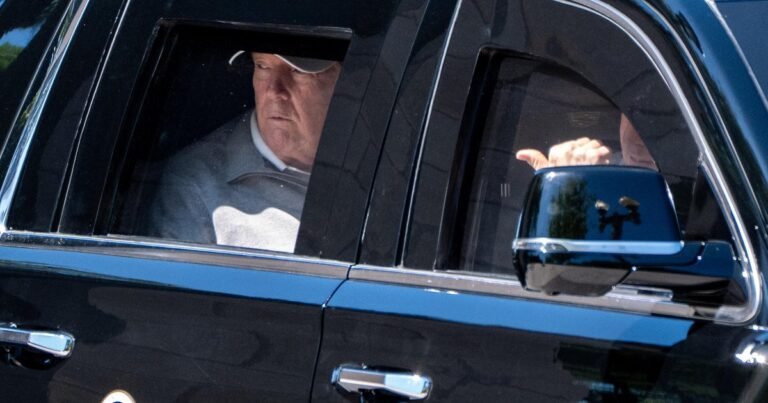
President Donald Trump recently made significant edits to a potential U.S.-Iran memorandum of understanding, according to a source familiar with the negotiations. The revisions focused on clauses related to the strategic Strait of Hormuz and the removal of highly enriched uranium from Iran.
The broad strokes of the proposed agreement include a 60-day cessation of violence, the reopening of the strait to shipping, and a framework to restart negotiations on Iran’s nuclear program. Multiple sources indicate the arrangement could also involve waivers or sanctions relief, potentially allowing Iran to access billions in frozen assets based on diplomatic progress.
Mediators led by Pakistan are facilitating the back-and-forth communication between Washington and Tehran. President Trump had indicated he would make a final determination on the deal on Friday, but further edits were subsequently sent to Iran. In a recent interview, the President stated he was in ‘no hurry’ to make a deal.
The White House did not respond to a request for comment on the edits. Axios was the first to report President Trump’s requested changes to the memorandum.
Separately, President Trump took to his Truth Social platform early Monday to criticize and reassure critics of his handling of efforts to extend the Iran war ceasefire. He wrote that Iran ‘really wants to make a deal, and it will be a good one for the U.S.A.,’ but urged critics to stop ‘chirping’ and allow him to negotiate without constant pressure.
In related military developments, U.S. Central Command reported launching ‘self-defense strikes’ targeting Iranian radar sites and command and control sites for drones over the weekend. The strikes were described as a response to aggressive Iranian actions, including the shootdown of a U.S. MQ-1 drone over international waters.
The U.S. military also confirmed it had disabled a cargo vessel in the Gulf of Oman after it ignored warnings and attempted to breach the U.S. blockade of Iranian ports. A Hellfire missile was fired into the engine of the Gambian-flagged Lian Star.
On the diplomatic front, Defense Secretary Pete Hegseth returned from the Shangri-La defense conference in Singapore, where he discussed the Strait of Hormuz blockade with allies. He noted that after discussions, countries were generally reassured by the American perspective. Hegseth also stated that Iran needs to accept the reality of not having a nuclear weapon for a deal to be reached.
The conflict has broader economic implications, with soaring energy prices from the war straining tourism-dependent economies in Southeast Asia. International economic leaders warned of increasing risks for fuel security if oil shipping through the Strait of Hormuz does not return to normal ahead of peak summer demand.
Israeli Prime Minister Benjamin Netanyahu announced that Israeli forces had crossed Lebanon’s Litani River, calling the capture of the medieval Beaufort castle a ‘dramatic shift’ in the campaign against Hezbollah. This deep incursion prompted France to request an emergency UN Security Council meeting over Israel’s ‘ever-deeper occupation of Lebanese territory.’
Lebanese Prime Minister Nawaf Salam accused Israel of pursuing a ‘scorched-earth policy’ in southern Lebanon, while defending his government’s decision to engage in U.S.-brokered security talks with Israel at the Pentagon. He acknowledged the negotiations were not guaranteed to succeed but called them the ‘least costly path’ for Lebanon.
The U.S. Treasury Department sanctioned an Iranian ‘fraud network’ accused of impersonating American small businesses to acquire restricted technology for Iran’s armed forces. Additionally, Treasury Secretary Scott Bessent revealed the U.S. has seized approximately $1 billion in Iranian cryptocurrency assets.
Iran’s Foreign Ministry stated there were ‘no negotiations’ taking place on its nuclear program, contradicting aspects of the U.S. narrative about the proposed deal. Iran’s semi-official Fars news agency also claimed President Trump’s public statements about the agreement contained ‘distortions.’
In other developments, Danish intelligence assessed that Iran poses an increased terror threat, particularly to Israeli, Jewish, and Iranian dissident interests in Europe. In the U.K., a Greek national was charged with assisting an intelligence service believed to be Iran in targeting a journalist for the Iran International outlet.
Doctors Without Borders called on Israel to guarantee the protection of civilians in Lebanon, reporting severe injuries including skull fractures and shrapnel wounds among patients at hospitals it supports. The medical charity described the situation as ‘alarming’ despite the nominal ceasefire.
Israeli forces also announced the killing of a Hamas commander who led a battalion during the October 7, 2023, terrorist attacks. This action occurred as Israel pressed military operations on multiple fronts against Iranian proxy groups in both Gaza and Lebanon.
This news article is created with AI enabled services and auto published, therefore it might contain errors, reader discrimination advised.
This article and views expressed therein, are solely that of the original news source also displayed for the interested reader, therefore it is not an act of copyright infringement by this platform, also this platform only aggregates the content and has no bearings and or shares any opinions or promotes views expressed by the original author, all intellectual property rights is totally credited to the original source.