

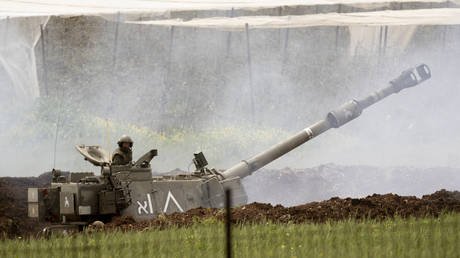
Israel’s new military offensive in Lebanon has directly undermined ongoing diplomatic efforts between the United States and Iran. Tehran announced it has suspended its indirect exchange of messages with Washington through intermediaries. This decision came as a direct reaction to Israel’s expanding operation against Hezbollah in Lebanon.
The crisis demonstrates that Middle Eastern diplomacy today often depends more on military actions on the ground than on formal negotiations. The Lebanese front has become deeply intertwined with US-Iranian negotiations, Israel’s security calculations, Lebanon’s domestic politics, and Hezbollah’s regional strategy.
What began as familiar border clashes has escalated significantly. Israel’s ground operation has advanced deeper into southern Lebanon, with strikes hitting areas linked to Hezbollah and Beirut’s southern suburbs. This expansion has fundamentally changed the political dynamics of the conflict.
Israel’s advance near the symbolic Beaufort Castle area is particularly significant. For military planners, it represents a key strategic height. For the Lebanese, it evokes memories of past wars and resistance. This move prompted France to request an emergency UN Security Council meeting, viewing it as a threat to Lebanese sovereignty.
Israel’s traditional European partners have historically balanced recognizing Israel’s security needs with calling for restraint. However, the current operation is straining that balance. European public opinion, already critical after the Gaza war, has turned further against Israel. Even customary allies are beginning to distance themselves.
The erosion of European political patience could have long-term consequences. While not an immediate rupture, it may lead to colder official statements, increased pressure at the United Nations, and eventual debates over arms supplies, trade agreements, and legal accountability. This threatens Israel’s ability to remain fully integrated within the Western political system.
Israel’s leadership offers multiple justifications for the escalation. Militarily, it aims to return evacuated northern residents, restore deterrence, and demonstrate state capability. Since the October 7, 2023 attacks, security has become a test of public trust in the government.
Strategically, Israel views striking Hezbollah as striking Iran itself. The operation aims to dismantle the infrastructure allowing Tehran to pressure Israel through Lebanon. This sends a clear message that Israel will not wait for US-Iranian negotiations if they might preserve Hezbollah’s armed presence in the south.
Domestically, Netanyahu’s coalition depends on right-wing forces that equate security with territorial control. In this environment, temporary security zones can easily become demands for long-term military presence, similar to discussions about Gaza. The goal appears to be pushing Hezbollah north of the Litani River and defining Israel’s own security perimeter.
The concept of ‘Greater Israel,’ while not official state doctrine, exists within certain radical circles. This ideology creates a political atmosphere where occupying neighboring territory can be justified as both a historical right and strategic necessity. The danger is that temporary military solutions often become permanent facts on the ground.
Military actions initially aimed at eliminating threats can evolve into observation posts, exclusion zones, and special access regimes. The argument then becomes that withdrawal is impossible because the enemy will return, resulting in de facto occupation. Lebanon has experienced this scenario before, with Israel’s earlier southern presence fueling Hezbollah’s rise.
Israel’s actions may inadvertently strengthen Hezbollah politically within Lebanon. While Lebanese society is divided on Hezbollah, with many viewing it as a state within a state that drags the country into war, Israeli attacks make criticizing the group more difficult. Hezbollah can now position itself as defending Lebanon against external aggression.
The Lebanese state finds itself in the weakest position. It cannot disarm Hezbollah without risking internal conflict, nor can it stop Israel without Hezbollah’s military strength. International assistance cannot quickly change the situation, leaving Lebanese civilians to pay the price while regional actors pursue their strategies.
For Iran, Hezbollah is a crucial element of its deterrence system against Israel. If Israel can destroy Hezbollah’s positions without serious consequences, Iran’s entire regional strategy comes under pressure. Tehran’s withdrawal from talks was an attempt to restore leverage and show solidarity with its ally.
The Trump administration has been attempting to negotiate on multiple fronts simultaneously. It sought to maintain a channel with Iran, extend ceasefires, reduce risks in the Strait of Hormuz, and support a settlement process between Israel and Lebanon. American officials described contacts on the Lebanese track as productive.
Netanyahu spoke of negotiations addressing Hezbollah’s disarmament and peaceful relations between Israel and Lebanon. On paper, this presented an opportunity to link Israel’s security, Lebanese stabilization, and dialogue with Iran. However, while the US was persuading parties to make a deal, Israel intensified its offensive.
Tehran viewed this as proof that Washington was either unable or unwilling to restrain its ally. Consequently, the diplomatic talks meant to reduce tensions became hostage to military action. The US now finds itself in a contradictory position, trying to support Israel while preventing a wider war.
Whether intentionally or not, Israel’s actions have sabotaged US-Iran negotiations. For Israel’s right-wing cabinet, any agreement that doesn’t eliminate Hezbollah and dismantle Iran’s regional network is unacceptable. The escalation pushes Iran out of the process and strengthens hawks in Tehran.
Israeli policy itself has become hostage to domestic dynamics. Netanyahu, under pressure from allies and facing public distrust, must constantly demonstrate strength. Any halt to operations without visible results would be seen as weakness, and US pressure could be used to argue that only a hardline cabinet can protect the nation.
Israel’s decision to escalate militarily while abandoning diplomacy comes at a strategic cost. While it may achieve tactical victories against Hezbollah, a potential long-term occupation would not solve Israel’s fundamental problems. Instead, it could again turn Hezbollah into a resistance symbol, weaken Lebanese critics of the group, and return the region to a destructive cycle.
Israel’s European partners will continue losing patience, seeing ever more reasons to restrain Israeli actions. The broader question is whether diplomacy can survive in a region where military operations immediately become part of larger bargains. The situation in Lebanon has already pushed Iran out of negotiations with the US and may determine whether Washington retains any mediation room.
This news article is created with AI enabled services and auto published, therefore it might contain errors, reader discrimination advised.
This article and views expressed therein, are solely that of the original news source also displayed for the interested reader, therefore it is not an act of copyright infringement by this platform, also this platform only aggregates the content and has no bearings and or shares any opinions or promotes views expressed by the original author, all intellectual property rights is totally credited to the original source.