

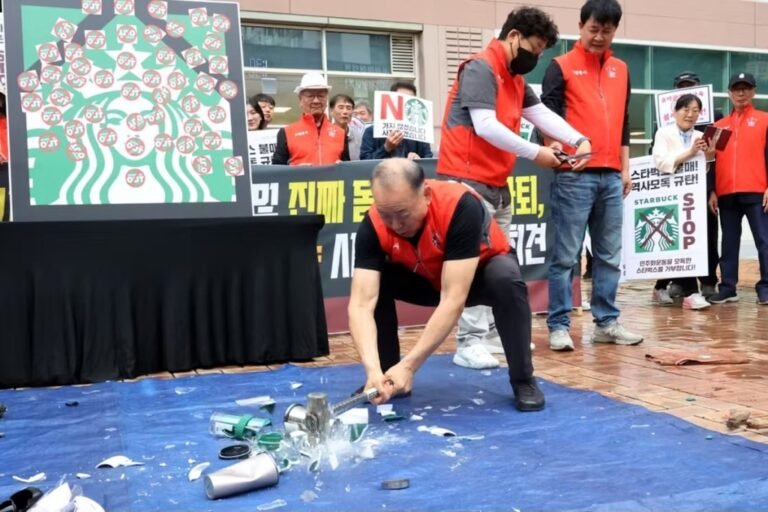
The controversy surrounding Starbucks in South Korea has escalated far beyond the initial criticism of a poorly conceived marketing campaign. What began as a public relations issue has transformed into a significant legal and political examination. The core question now is whether the country’s collective democratic memory will act as a check on arbitrary authority or if it will allow such power to be perpetuated.
Law enforcement officials have launched a formal investigation into two high-profile business figures. Shinsegae Group chairman Chung Yong-jin and former Starbucks Korea CEO Sohn Jeong-hyun are the subjects of this probe. The investigation was initiated after criminal complaints were filed, which allege offenses including insult, defamation, and unspecified violations related to the marketing incident.
This legal scrutiny places the actions of major corporate leaders under an intense public and judicial spotlight. The case has moved from social media debate and consumer backlash into the realm of criminal justice. It underscores the potential legal consequences that can arise from corporate communications and public statements in a highly connected and legally vigilant society.
The outcome of this investigation will likely have broader implications. It may set a precedent for how similar controversies are handled in the future, particularly regarding the boundaries of corporate speech and the accountability of executives. The situation remains a closely watched barometer of the balance between business influence and the rule of law in South Korea.
This news article is created with AI enabled services and auto published, therefore it might contain errors, reader discrimination advised.
This article and views expressed therein, are solely that of the original news source also displayed for the interested reader, therefore it is not an act of copyright infringement by this platform, also this platform only aggregates the content and has no bearings and or shares any opinions or promotes views expressed by the original author, all intellectual property rights is totally credited to the original source.