

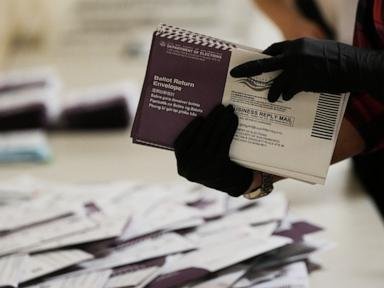
A federal judge heard oral arguments on Friday from plaintiffs seeking to block President Donald Trump’s executive order on election procedures. The order, signed by the President, directs the creation of a federal voter registration list and establishes new limitations on mail-in voting.
The legal challenge comes from two separate lawsuits. One was filed by a coalition of voting rights advocacy groups, and the other by a coalition comprising attorneys general from approximately two dozen states. Both sets of plaintiffs argue the executive order is an unconstitutional overreach of federal power.
The plaintiffs contend that the President lacks the authority to unilaterally alter election administration, which is traditionally managed by individual states. They argue the order could lead to voter purges and create barriers to voting, especially for minority groups, the elderly, and rural voters who rely on mail ballots.
Lawyers for the Trump administration defended the executive order, stating it is a lawful exercise of the President’s authority to ensure election integrity. They argued the measures are necessary to prevent voter fraud and maintain accurate voter rolls, which they claim are currently vulnerable to error and abuse.
The judge, who is presiding over both cases, asked pointed questions of both sides during the hearing. The focus was on the balance of presidential power versus states’ rights in conducting elections and the potential immediate impact of the order on the upcoming election cycle.
A decision on whether to issue a preliminary injunction to halt the executive order while the lawsuits proceed is expected in the coming weeks. The outcome could have significant implications for federal and state control over election rules and the future of mail-in voting nationwide.
This news article is created with AI enabled services and auto published, therefore it might contain errors, reader discrimination advised.
This article and views expressed therein, are solely that of the original news source also displayed for the interested reader, therefore it is not an act of copyright infringement by this platform, also this platform only aggregates the content and has no bearings and or shares any opinions or promotes views expressed by the original author, all intellectual property rights is totally credited to the original source.